
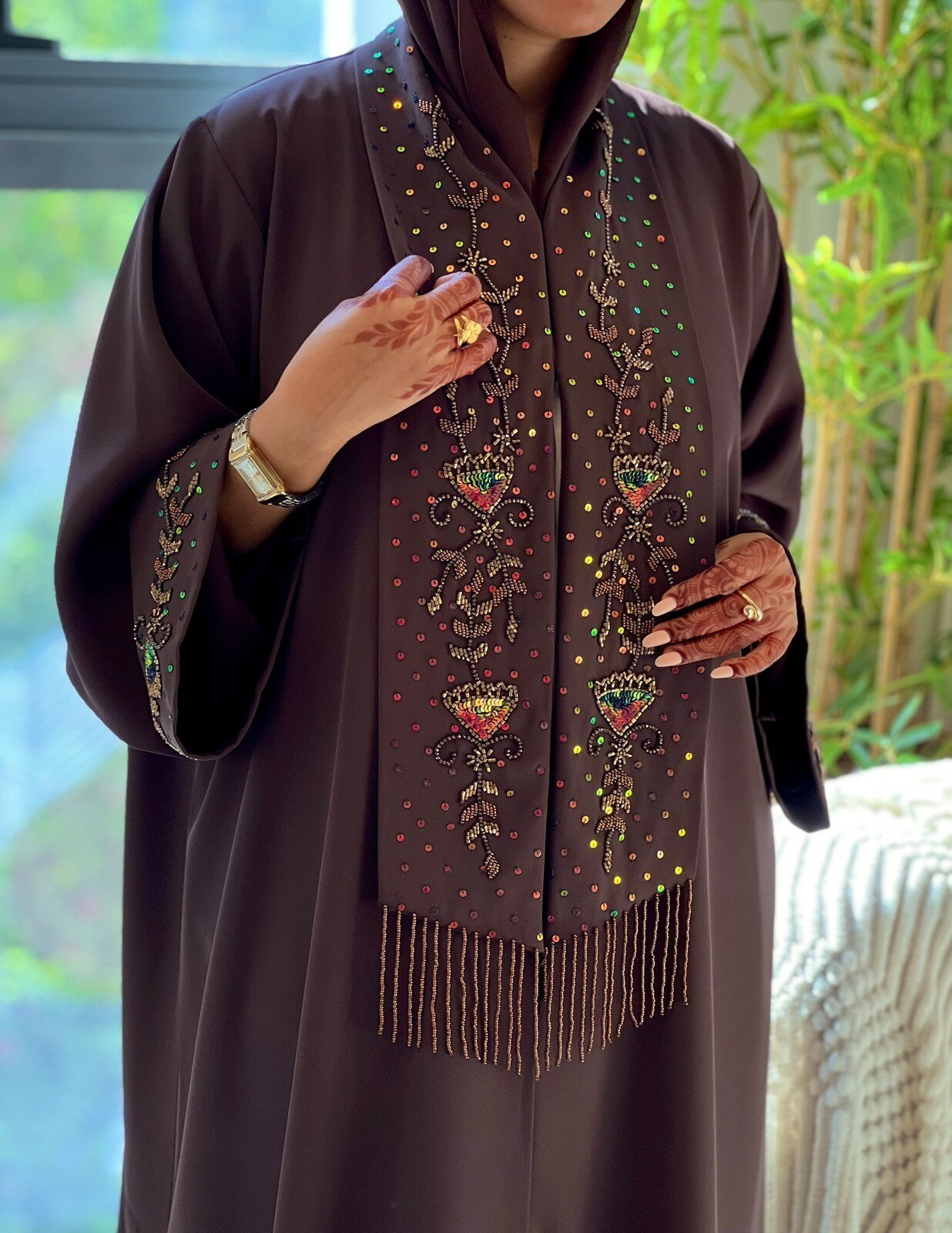

Warm weather changes the way an abaya feels throughout the day. In the UAE, many women move between outdoor heat, air-conditioned cars, offices, malls and evening spaces, so the most comfortable abaya is not simply the thinnest one. Fabric weight, drape, opacity, layering and construction all matter.
What Makes an Abaya Comfortable in Hot Weather?
When comparing fabrics, look beyond the fabric name. Two materials described as “crepe” or “Nida” can feel very different depending on their weight and weave. A comfortable warm-weather abaya should allow easy movement, avoid unnecessary bulk and provide enough opacity for confident wear.
Open styles may also feel different from closed abayas because air can move more freely through the garment, although the inner layer adds another piece of clothing. The best choice depends on how you prefer to dress and how much time you spend outdoors.
Premium Korean Nida
Korean Nida is widely used for abayas because of its smooth hand feel and fluid drape. Lighter versions can work well for everyday wear when you want a clean silhouette without a stiff appearance.
For warm-weather dressing, pay attention to the specific weight of the Nida rather than assuming all Nida fabrics are equally light. A fluid, medium-light style can be useful for errands, work and casual gatherings, especially when the cut is not excessively layered.
Crepe Fabrics
Crepe can be a good option when you prefer a slightly more structured appearance. The textured surface often creates an elegant matte finish, and different weights can be used for both everyday and occasion abayas.
Light or medium crepe may feel easier in warm conditions than very heavy ceremonial fabrics. Heavier crepe can still be appropriate for indoor events, evenings or designs where structure and embellishment are more important than maximum lightness.
Why Fabric Weight Matters More Than the Name
“Nida,” “crepe” and similar labels describe broad fabric families rather than one fixed experience. When shopping online, read the product description carefully and look at how the fabric falls in photos or video. A fabric that drapes softly around the body often feels different from one designed to hold a sculpted silhouette.
For an everyday hot-weather abaya, a lighter construction with fewer heavy decorative elements will usually feel easier to wear for long periods.
Consider the Inner Layer
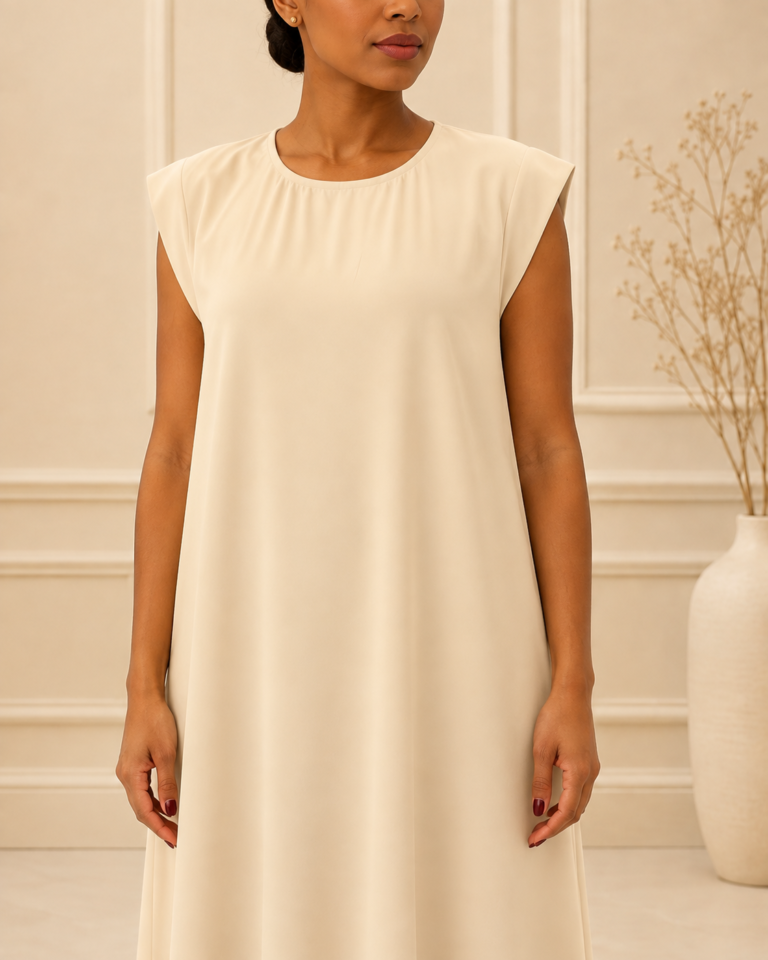
If you choose an open abaya, the comfort of the inner dress matters just as much as the outer piece. A bulky or heavy inner layer can cancel out the benefit of a lighter abaya.
Choose a smooth inner dress that sits close enough to create a clean silhouette without unnecessary layers. Browse our Inner Dresses for simple options designed for layering beneath open abayas.
Are Light Colours Cooler?
Lighter colours can absorb less solar energy than very dark shades in direct sunlight, but fabric, airflow, exposure time and garment construction still have a major effect on comfort. A lightweight black abaya may feel more comfortable than a heavy light-coloured one.
Colour is therefore best treated as one factor rather than the deciding factor. Choose shades you enjoy wearing and pay equal attention to fabric weight and layering.
Choose the Right Fabric for the Occasion
- Daily errands and commuting: prioritise lightness, movement and easy care.
- Work: look for a polished fabric that can handle repeated wear without feeling heavy.
- Travel: choose a fabric that layers easily and is not excessively delicate.
- Weddings and formal events: a heavier or more structured fabric may be worth the trade-off if the event is mainly indoors.
- Outdoor daytime events: minimise heavy beadwork, thick layering and dense construction where possible.
Embellishment Can Add Weight
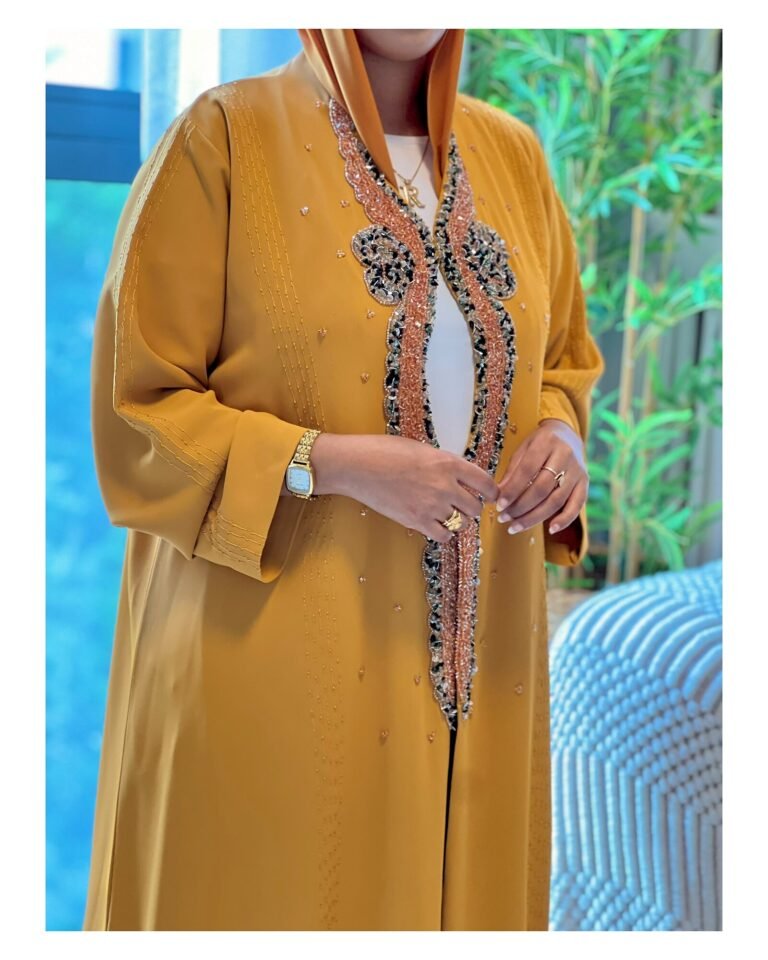
Beadwork, crystals and embroidery can make an abaya visually striking, but they also add physical weight. For daytime heat, simpler decoration may be more comfortable. Save heavily embellished designs for shorter occasions, indoor events or evenings when temperature is less demanding.
Use Movement as a Clue When Shopping Online
Video is particularly useful for judging warm-weather suitability because it shows how an abaya moves. Look at the sleeves, hem and side panels. A garment that moves fluidly will often feel less rigid than one that holds a very structured shape.
Our Abaya collection includes different fabrics and levels of structure, so compare product descriptions rather than choosing by colour alone.
Do Not Sacrifice Opacity
Very thin fabric is not automatically better. If a fabric is too sheer, you may need heavier layering underneath, which can make the complete outfit warmer. A fabric with enough coverage at a comfortable weight can be more practical than an ultra-light but transparent option.
Final Thought
The best abaya fabric for UAE weather is the one that balances comfort, opacity, movement and the occasion. Lightweight or medium-weight Nida and crepe can both work well, but the exact construction matters more than the fabric name alone. Think about the whole outfit—including the inner layer—and choose a piece that you can move in comfortably from outdoor heat to air-conditioned interiors.
 Fabric & CareWhat to Wear Under Your Abaya for Maximum Comfort
 Fabric & CareHow to Store Embellished Abayas Between Occasions
Fabric & CareAbaya Care 101: Keep It Beautiful for Longer
“Elegance is not about what you wear, but how you wear it.”